
3D concrete printing, PISA database and more from the latest awards night
18 June 2026
Last week, six COWI colleagues shared their research projects funded by COWIfonden’s Rapid Innovation Programme.
At the awards night, Senior Railway Track Engineer Anna Lukasik from COWI in Poland presented her project on 3D concrete printing, which was named the best project.
While working on a design project, Anna Lukasik realised that not all designs make a successful transition from concept to construction since digital models are often created without a clear vision of how the design will be built in practice. As a solution to this, Anna Lukasik decided to explore how 3D concrete printing could be successfully integrated into a manufacturing process.
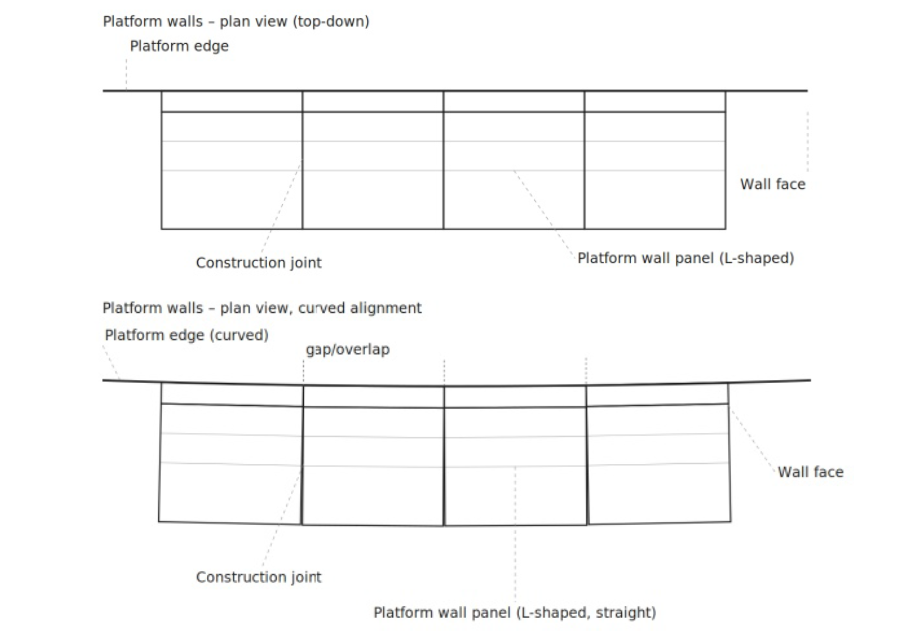
“The idea came from a common challenge on railway projects. Traditional precast platform walls work well on straight sections of track, but they can be difficult to use on curved platforms because gaps can form between the individual elements.
3D concrete printing offers a potential solution to this problem. Unlike standard precast elements, printed components can be easily adapted to different shapes and geometries. This flexibility makes it possible to create elements that better fit curved platform edges. In addition, 3D printing has the potential to reduce material use and improve construction time and cost efficiency,” says Anna Lukasik.
3D printing as a viable manufacturing method
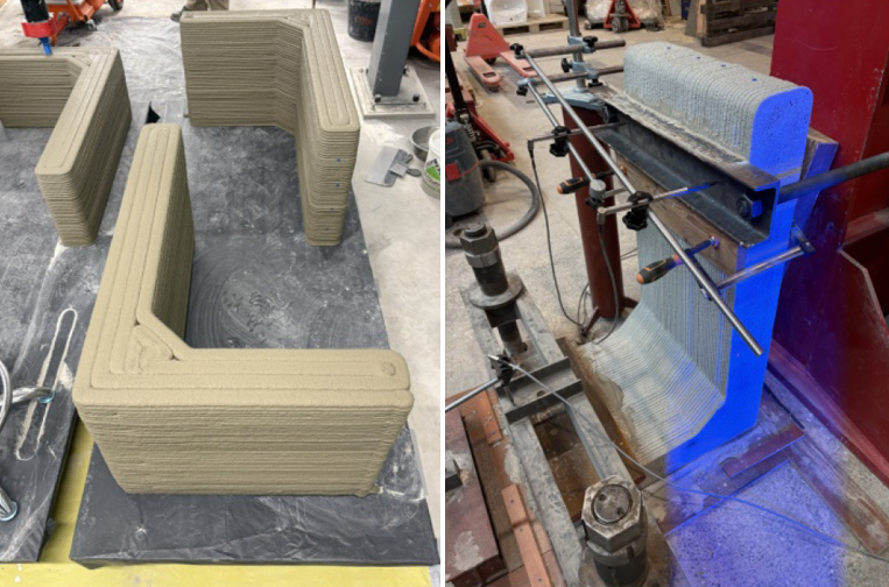
The project demonstrated the potential of 3D concrete printing as a viable manufacturing method for railway infrastructure components and provided valuable insights into the use of alternative reinforcement materials.
“The research showed that 3D concrete printing can be used to produce structural elements with performance comparable to traditionally manufactured precast components.
Another key finding was that composite reinforcement, such as fibreglass-reinforced polymer, can be used as an alternative to traditional steel reinforcement. Strength tests showed that elements reinforced with steel and fibreglass achieved similar failure loads and performed comparably to conventional prefabricated elements. However, the two materials behaved differently under load. This has generated new questions that require further investigation. My main focus moving forward is the study of inter-layer connections in 3D-printed concrete.
Through this research we wanted to make this topic available for researchers, but first and foremost for engineers. As engineers, we are able to change the way the world is built, which the 3D concrete printing guide is a small contribution to,” explains Anna Lukasik.
The research will be presented in an upcoming issue of the Journal of Building Engineering. In the meantime, more information can be found in the 3D printing guide here.
Building a pile soil analysis database for early-phase offshore wind projects
Another highlighted project from the awards night was carried out by Specialist Peter Ladefoged from COWI in India. The project was presented by Senior Specialist Guillaume M. Melin. The project focuses on building a database of soil reaction curves based on COWI's offshore wind experience at typical sites worldwide.
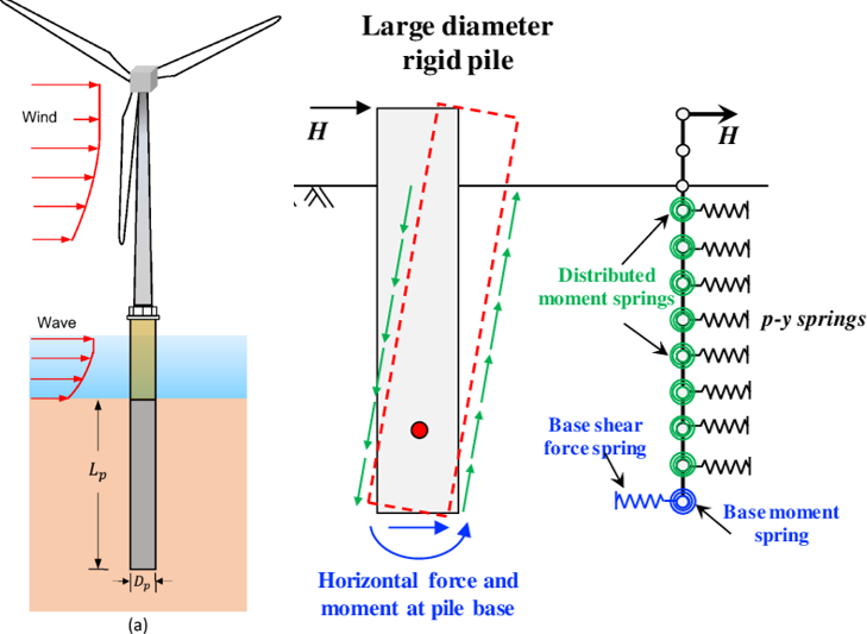
“The idea is that we can link the soil reaction curves to various soil classification parameters, which allows COWI to use the database for early maturation studies for any offshore project, to get a fast screening and concept design tool that is applicable across various foundation types, such as monopiles, jackets etc.,” explains Peter Ladefoged.
Building the database required extracting and calibrating 10,000 soil reaction curves within the PISA (pile soil analysis) framework, as well as grouping these curves into generic depth-variation functions that can be applied to any geometry or combination of soil units.
“In addition to creating the database, we have gained more in-depth knowledge about the strength normalisation of sand during this project, including how this is to be applied and how strength scales as a function of the friction angle of sand,” says Peter Ladefoged.
The intent is also to use machine learning across the dataset in next steps to predict full soil reaction curves directly from early-stage availability of soil classification parameters. The project is currently being wrapped up, but there is significant potential to build on the project going forward. This includes adding more projects to the database, which will strengthen the core for future machine-learning algorithms.
Dive into all projects from the awards night
The board of COWIfonden has allocated DKK 2.5 million for the Rapid Innovation Initiative in 2026. A celebratory awards night is held four times a year, during which successful applicants present their findings to COWI and COWIfonden. The next awards night will be held on 21 September 2026.
You can watch the six presentations from the latest awards night below.
| Name | Organisation | Topic of study |
| Sophie Dikmans | Arkitema A/S (NO) Buildings and Industry |
Lighter footprints: A toolbox for building in a changing climate |
| Guillaume M. Melin/Peter Ladefoged | COWI India EDC, Industry and Energy |
PISA database for early phase offshore wind projects |
| Anna Lukasik | COWI Poland Railways |
Innovative use of 3D concrete printing with composite reinforcement for the production of L-shaped platform walls |
| Allan Larsen | COWI A/S (DK) Heavy Civil |
New cable damping design method for bridge hanger cables |
| Kathrine Thim Steenholdt | COWI A/S (DK) Water and Environment |
Early-phase tree assessment framework for ensuring no net loss of urban canopy – prototype development |
| Mads Greve Pedersen/Isaac Ferreras Alcover | COWI A/S (DK) Heavy Civil |
Virtual sensing for continuous fatigue load monitoring and lifetime extension of offshore wind turbine (OWT) support structures |
Related news
-
 21 October 2026
Global
Former COWIfonden Chair Eigil Steen Pedersen has passed away
-
 30 September 2026
Global
Curiosity in Action
-
 22 June 2026
Global
COWIfonden’s donations in the spring of 2026
Headquarters
COWI A/S
Parallelvej 2
2800 Kongens Lyngby
Denmark
Shortcuts
Sustainability and governance
Terms of use